
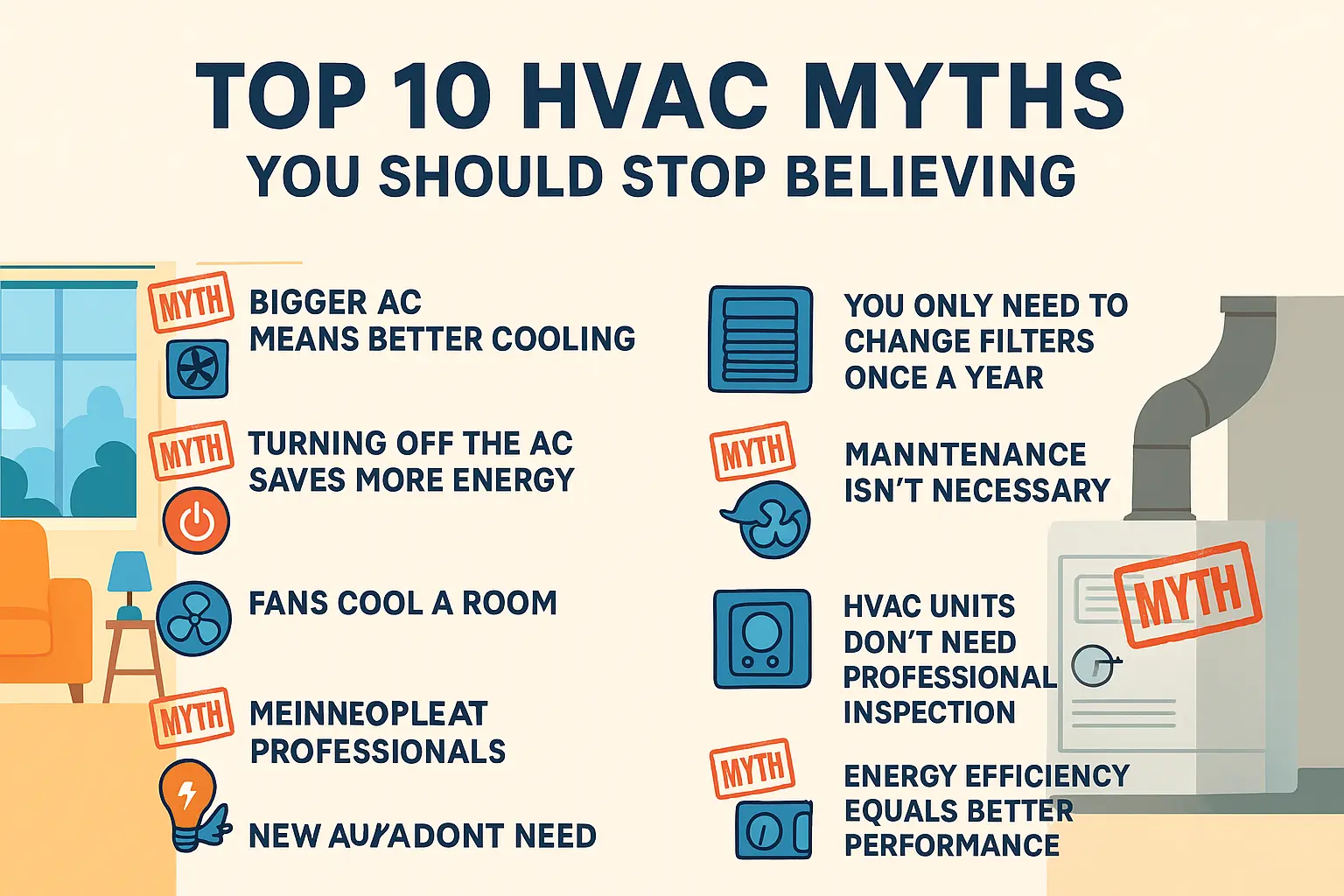

Many homeowners unknowingly perpetuate common misconceptions about their heating, ventilation, and air conditioning (HVAC) systems. These HVAC myths can lead to inefficient energy use and decreased home comfort.
Understanding the truth behind these misconceptions is crucial for optimizing your system’s performance and creating a more comfortable living space. By debunking these myths, homeowners can make informed decisions about their HVAC systems, potentially saving on energy costs and enhancing their overall home comfort.

As we explore the most prevalent HVAC misconceptions, you’ll gain insight into how to improve your home’s energy efficiency and comfort level. This knowledge will empower you to take control of your HVAC system’s performance.
Understanding Your HVAC System: The Basics
Knowing how your HVAC system works is key to optimizing its performance and longevity. At its core, an HVAC system is designed to control the temperature, humidity, and air quality in your home.
How HVAC Systems Actually Work
HVAC systems operate by using a combination of heating, cooling, and ventilation components to maintain a comfortable indoor environment. The system heats or cools your home by circulating air through ducts, regulated by a thermostat. This process involves complex interactions between various components, including furnaces, air conditioners, heat pumps, and ductwork.
Common Components and Their Functions
Key components of an HVAC system include:
- The thermostat, which controls the temperature.
- The furnace or heating unit, responsible for warming the air.
- The air conditioner or cooling unit, which cools the air.
- Ducts and vents that distribute the heated or cooled air throughout your home.
| Component | Function |
|---|---|
| Thermostat | Regulates temperature settings |
| Furnace/Heating Unit | Heats the air |
| Air Conditioner/Cooling Unit | Cools the air |
| Ducts and Vents | Distributes air throughout the home |
Why Proper Information Matters
Understanding your HVAC system’s basics is crucial for making informed decisions about its maintenance and operation. Proper knowledge helps in identifying potential issues early, ensuring efficient operation, and prolonging the system’s lifespan. By grasping how your HVAC system works, you can take steps to optimize its performance and avoid costly repairs.
The Impact of HVAC Myths on Your Home and Wallet
The truth about your HVAC system is crucial because misconceptions can affect your home’s energy efficiency. Believing in common HVAC myths can lead to a range of negative consequences, from increased energy consumption to unnecessary repair and replacement costs, ultimately affecting your home’s comfort and your wallet.
Energy Consumption Consequences
One of the most significant impacts of HVAC myths is on energy consumption. For instance, believing that setting the thermostat higher or lower than necessary will heat or cool your home faster can lead to increased energy bills. In reality, HVAC systems work at a consistent pace, and extreme thermostat settings only result in higher energy consumption without speeding up the heating or cooling process.
Unnecessary Repair and Replacement Costs
HVAC myths can also lead to unnecessary repair and replacement costs. For example, believing that a bigger HVAC unit provides better performance can result in overspending on a system that’s too large for your home. Proper sizing is crucial for efficient operation and cost-effectiveness.
“Proper sizing is crucial for efficient operation and cost-effectiveness.” – HVAC Expert
Comfort and Health Implications
Moreover, HVAC myths can affect your home’s comfort and indoor air quality. For instance, neglecting regular maintenance due to the misconception that it’s unnecessary unless the system breaks can lead to reduced system efficiency and poor air quality, potentially exacerbating respiratory issues.
By understanding the facts about your HVAC system, you can avoid these common pitfalls and ensure your home remains comfortable while minimizing energy consumption and unnecessary expenses.
Top10 HVAC Myths You Should Stop Believing
The truth about HVAC systems is often clouded by misconceptions and myths. Many of these myths have been perpetuated over time, leading to confusion among homeowners about what is fact and what is fiction.
Understanding the origin of these misconceptions is crucial to making informed decisions about your HVAC system. Some myths stem from outdated information, while others are the result of misinterpretation of how HVAC systems work.
The Origin of Common HVAC Misconceptions
Common HVAC misconceptions often arise from a lack of understanding of how these systems operate. For instance, many believe that HVAC systems are too complex to comprehend, leading to a reliance on potentially misinformed contractors or outdated practices.
How These Myths Cost Homeowners Money and Comfort
Believing in HVAC myths can have significant financial and comfort implications. For example, oversized HVAC units, a common myth-driven mistake, can lead to increased energy bills and reduced system lifespan.
- Increased Energy Bills: Inefficient systems waste energy, costing homeowners more.
- Reduced Comfort: Incorrectly sized or maintained systems can lead to inconsistent temperatures and humidity issues.
By understanding and debunking these myths, homeowners can make better decisions, enhancing both their comfort and energy efficiency.
Myth1: Bigger HVAC Units Provide Better Performance
When it comes to HVAC systems, size matters, but bigger isn’t always better. Many homeowners mistakenly believe that a larger unit will provide superior heating and cooling. However, this misconception can lead to a range of issues, from increased energy bills to reduced system lifespan.
The Truth About Proper Sizing
Proper sizing is crucial for an HVAC system to perform efficiently. An appropriately sized system ensures that your home is heated and cooled effectively without wasting energy. Proper sizing involves calculating the correct capacity based on factors such as your home’s square footage, insulation, and window orientation.
Problems Caused by Oversized Systems
Oversized HVAC systems can cause several problems, including:
- Increased energy consumption due to frequent cycling on and off
- Reduced humidity control, leading to a less comfortable indoor environment
- Shorter system lifespan due to the stress of frequent start-ups
How to Determine the Right Size for Your Home
To determine the correct size for your HVAC system, it’s essential to perform a load calculation. This calculation, typically done by a professional HVAC technician, takes into account various factors such as your home’s size, layout, and insulation levels. A proper load calculation ensures that your system is neither too large nor too small for your home’s needs, optimizing both performance and energy efficiency.
By understanding the importance of proper sizing and avoiding the pitfalls of oversized systems, homeowners can enjoy a more comfortable, energy-efficient home. Ensuring your HVAC system is correctly sized is a critical step in maintaining a comfortable and efficient living space.
Myth2: Closing Vents in Unused Rooms Saves Energy
Many homeowners believe that closing vents in unused rooms is an effective way to save energy, but this common myth can actually lead to more harm than good. While the intention is to reduce energy consumption by directing airflow only to occupied spaces, the reality is more complex.
How Closed Vents Affect System Pressure
Closing vents in unused rooms can disrupt the delicate balance of your HVAC system’s airflow, leading to increased pressure within the ductwork. This increased pressure can cause leaks, reduce system efficiency, and potentially damage your HVAC system over time.
The Real Impact on Energy Bills
Rather than saving energy, closing vents can sometimes increase energy bills. When vents are closed, the system works harder to achieve the desired temperature, which can lead to increased energy consumption. Additionally, the strain on the system can result in more frequent repairs and a shorter lifespan.
Better Alternatives for Zone-Based Temperature Control
For homeowners looking to implement zone-based temperature control, a more effective solution is to install a zoned HVAC system. This system allows for the precise control of temperature in different areas of the home without the negative effects associated with closing vents. Some key benefits include:
- Improved Comfort: By controlling the temperature in different zones, homeowners can enjoy a more consistent and comfortable indoor climate.
- Enhanced Energy Efficiency: Zoned systems can help reduce energy waste by directing heating and cooling only to the areas that need it.
- Reduced Wear and Tear: By avoiding the strain caused by closed vents, zoned systems can help extend the lifespan of the HVAC equipment.
Myth3: Setting the Thermostat Higher Heats Your Home Faster
Many homeowners believe that cranking up the thermostat will heat their home faster, but this common misconception can lead to unnecessary energy consumption. In reality, your heating system works at a consistent pace regardless of the thermostat setting.
How Thermostats Actually Work
A thermostat is essentially a switch that activates your heating system when the room temperature drops below the set point. It doesn’t control how hard the system works, just when it turns on and off. Setting the thermostat higher doesn’t make the heating system work faster; it just stays on longer until it reaches the desired temperature.
The Science Behind Heating Cycles
The heating cycle is determined by the system’s design and capacity, not by the thermostat setting. Your HVAC system’s heating capacity is fixed, so turning the thermostat up doesn’t make it heat your home faster. Instead, it may lead to increased energy bills due to the system running for longer periods.
Efficient Temperature Management Strategies
To optimize energy efficiency and home comfort, consider using a programmable thermostat. This allows you to adjust temperatures according to your schedule, saving energy when you’re not home or when you’re sleeping. Maintaining a consistent temperature can also help in reducing energy consumption.
Myth4: Air Filters Only Need Changing Once a Year
The notion that air filters only need to be changed annually is a myth that can have significant consequences on both your HVAC system’s performance and your home’s air quality.
Regularly changing your air filter is a crucial aspect of HVAC maintenance. The frequency of replacement depends on several factors, including the type of filter used and the specific needs of your household.
Recommended Filter Replacement Schedules
Most experts agree that air filters should be inspected monthly and replaced every 1-3 months, depending on usage and manufacturer recommendations.
How Different Filter Types Affect Replacement Frequency
Different types of air filters have varying lifespans. For example, basic fiberglass filters may need to be replaced more frequently than pleated filters or high-efficiency filters.
| Filter Type | Average Lifespan | Replacement Frequency |
|---|---|---|
| Fiberglass | 1 month | Monthly |
| Pleated | 3 months | Every 3 months |
| High-Efficiency | 6 months | Every 6 months |
Signs Your Filter Needs Immediate Replacement
If you notice a decrease in airflow, an increase in dust accumulation, or a rise in your energy bills, it may be a sign that your air filter needs to be replaced immediately.
Myth5: Maintenance Is Only Necessary When Something Breaks
Proactive maintenance is key to extending the life of your HVAC system and ensuring it operates efficiently. Many homeowners overlook regular maintenance until a problem arises, leading to costly repairs and reduced system lifespan.
The Value of Preventative Maintenance
Preventative maintenance involves regular checks and services that help prevent system failures. By identifying potential issues early, homeowners can avoid emergency repairs and ensure their HVAC system runs smoothly throughout its lifespan.
Critical Maintenance Tasks That Extend System Life
Several critical maintenance tasks can significantly extend the life of an HVAC system. These include:
- Regular filter replacements
- Coil cleaning
- System inspections
- Drainage checks
| Maintenance Task | Frequency | Benefit |
|---|---|---|
| Filter Replacement | Every 1-3 months | Improved Air Quality & Efficiency |
| Coil Cleaning | Annually | Enhanced Heat Transfer & Efficiency |
| System Inspection | Bi-Annually | Early Detection of Potential Issues |
Long-term Cost Savings of Regular Service
Regular HVAC maintenance not only extends the system’s life but also leads to significant long-term cost savings. By ensuring the system operates at peak efficiency, homeowners can reduce their energy bills and avoid costly repairs. As energy efficiency improves, so does the overall comfort and health of the indoor environment.
Myth6: Ceiling Fans Cool Rooms Even When You’re Not There
The notion that ceiling fans can cool an empty room is a common misconception. In reality, ceiling fans work by creating a cooling effect on individuals in the room, not by lowering the room’s temperature.
How Ceiling Fans Actually Create Comfort
Ceiling fans make a room feel cooler by circulating air, which enhances the body’s natural cooling process through convection. This creates a comfortable environment for occupants.
Seasonal Direction Settings for Maximum Efficiency
To maximize efficiency, ceiling fans should rotate counterclockwise in the summer to push cool air down and clockwise in the winter to circulate warm air that has risen to the ceiling.

Energy-Efficient Fan Usage Practices
To use ceiling fans efficiently, turn them off when leaving the room, as they don’t cool the space itself. Also, consider using smart ceiling fans that can be controlled remotely to optimize their operation.
| Season | Fan Direction | Benefit |
|---|---|---|
| Summer | Counterclockwise | Creates a cooling effect by pushing cool air down |
| Winter | Clockwise | Circulates warm air, reducing heating costs |
By understanding how ceiling fans work and using them correctly, homeowners can enhance their home comfort while maintaining energy efficiency.
Myth7: The Location of Your Thermostat Doesn’t Matter
The placement of your thermostat is crucial for maintaining optimal home comfort and energy efficiency. A thermostat that is not placed correctly can lead to inaccurate temperature readings, causing your HVAC system to work inefficiently.
Ideal Thermostat Placement for Accurate Readings
For accurate temperature readings, your thermostat should be placed in a central location, away from direct sunlight, drafts, and heat sources. This ensures that the thermostat can effectively gauge the average temperature in your home.
Common Thermostat Placement Mistakes
Common mistakes include placing thermostats near heating or cooling vents, in closets, or near windows. These locations can cause the thermostat to misread the temperature, leading to discomfort and increased energy bills.
Smart Thermostat Solutions for Temperature Inconsistencies
Smart thermostats can help mitigate temperature inconsistencies by learning your schedule and preferences. They can also provide more accurate temperature control and energy usage data.
| Feature | Standard Thermostat | Smart Thermostat |
|---|---|---|
| Temperature Control | Manual adjustment | Automated scheduling and learning |
| Energy Efficiency | Limited optimization | Advanced energy usage tracking and optimization |
| Remote Access | No | Yes, through smartphone apps |
Myth8: HVAC Systems Don’t Affect Indoor Air Quality
HVAC systems play a more significant role in maintaining indoor air quality than most people realize. While many believe that these systems merely heat or cool the air, they actually have a profound impact on the quality of the air we breathe indoors.
How Your HVAC System Filters and Circulates Air
Your HVAC system is equipped with air filters that capture dust, pollen, and other airborne particles, improving the air quality. The system’s ability to circulate air ensures that the filtered air is distributed throughout your home.
Common Indoor Air Pollutants Your System Can Address
Common indoor air pollutants include dust mites, mold spores, and pet dander. A well-maintained HVAC system can help mitigate these pollutants through proper filtration and ventilation.
| Pollutant | Impact on Health | HVAC Solution |
|---|---|---|
| Dust Mites | Allergic reactions | Regular filter changes |
| Mold Spores | Respiratory issues | Proper ventilation |
| Pet Dander | Allergic reactions | High-efficiency filters |
Solutions for Improving Indoor Air Quality
To further improve indoor air quality, consider upgrading to high-efficiency air filters, installing a humidistat, or incorporating an air purifier into your HVAC system. Regular maintenance is also crucial for ensuring your system operates effectively.
As Dr. Jane Smith, an indoor air quality expert, notes, “A well-maintained HVAC system is the cornerstone of good indoor air quality. Regular maintenance and the right filtration can significantly reduce indoor air pollutants.”
“The quality of the air inside homes is just as important as the quality of the air outside.”
— EPA
Essential HVAC Maintenance Tips Every Homeowner Should Know
Regular HVAC maintenance is not just about keeping your system running; it’s about optimizing its performance and longevity. By adopting a proactive approach to maintenance, homeowners can ensure their HVAC systems operate efficiently, providing a comfortable home environment while minimizing energy consumption.

Seasonal Maintenance Checklist
To keep your HVAC system in top condition, it’s crucial to follow a seasonal maintenance checklist. This includes tasks such as:
- Checking and replacing air filters every 1-3 months
- Inspecting and cleaning condenser coils annually
- Scheduling professional tune-ups at the start of heating and cooling seasons
When to Call a Professional vs. DIY Maintenance
While some maintenance tasks can be performed by homeowners, others require professional expertise. DIY tasks include changing filters and keeping the area around the HVAC system clear. However, tasks like inspecting electrical connections and checking refrigerant levels should be handled by professionals to ensure safety and system integrity.
Latest HVAC Technologies Worth Considering
Advancements in HVAC technology have led to more efficient and effective systems. Two notable developments include:
Smart Thermostats and Energy Monitoring
Smart thermostats offer advanced energy monitoring capabilities, allowing homeowners to track their energy usage in real-time and make adjustments to optimize efficiency. These devices can learn your schedule and preferences to automatically adjust temperatures, potentially leading to significant energy savings.
High-Efficiency Systems and Components
Upgrading to high-efficiency HVAC systems and components can further reduce energy consumption. Look for systems with high SEER (Seasonal Energy Efficiency Ratio) ratings, which indicate their efficiency. Additionally, components like variable speed motors can enhance system performance and efficiency.
By following these essential HVAC maintenance tips and considering the latest technologies, homeowners can ensure their systems operate efficiently, effectively, and safely, providing a comfortable home environment while minimizing energy costs.
Conclusion
Understanding the truth about your HVAC system is crucial for achieving optimal home comfort and energy efficiency. By debunking common HVAC myths, homeowners can avoid unnecessary costs, improve their system’s performance, and create a healthier living environment.
Throughout this article, we’ve explored the top HVAC myths that can impact your home’s comfort and energy bills. From the importance of proper system sizing to the benefits of regular maintenance, being informed is key to making the most of your HVAC system.
By applying the knowledge gained, homeowners can take control of their energy efficiency and home comfort. Whether it’s adjusting thermostat settings or upgrading to a more efficient system, every step counts. Stay informed, and start optimizing your HVAC system today to enjoy a more comfortable and cost-effective home.
FAQ
What are some common HVAC myths that can impact my home’s comfort and energy efficiency?
Some common myths include believing that bigger HVAC units provide better performance, closing vents in unused rooms saves energy, and setting the thermostat higher heats your home faster. Understanding the truth behind these myths can help you make informed decisions about your HVAC system.
How often should I change my air filters, and what type of filter is best for my HVAC system?
The frequency of changing air filters depends on various factors, including the type of filter, usage, and manufacturer’s recommendations. Typically, filters should be changed every 1-3 months. It’s also essential to choose the right type of filter for your system to ensure optimal performance and indoor air quality.
Is it necessary to perform maintenance on my HVAC system, and how often should it be done?
Yes, regular maintenance is crucial to extend the life of your HVAC system, improve its efficiency, and prevent costly repairs. It’s recommended to schedule maintenance at least twice a year, ideally before the heating and cooling seasons.
Can ceiling fans really make a difference in my home’s comfort, and how should I use them?
Ceiling fans can significantly enhance your home’s comfort by circulating air and creating a cooling effect in the summer and a warming effect in the winter. To maximize their efficiency, run them counterclockwise in the summer and clockwise in the winter.
How can I improve the indoor air quality in my home, and what role does my HVAC system play?
Your HVAC system plays a significant role in maintaining indoor air quality by filtering and circulating air. To improve indoor air quality, consider upgrading to a high-efficiency filter, using a humidifier or dehumidifier as needed, and ensuring proper ventilation in your home.
What are the benefits of using a smart thermostat, and how can it help me save energy?
Smart thermostats can help you save energy by learning your temperature preferences, adjusting the temperature when you’re not home, and providing you with insights into your energy usage. They can also be controlled remotely, allowing you to adjust the temperature from your smartphone or tablet.
How can I determine the right size HVAC system for my home, and why is proper sizing important?
Proper sizing is crucial to ensure your HVAC system operates efficiently and effectively. To determine the right size, consult with a professional who can assess your home’s heating and cooling needs, taking into account factors like insulation, window size, and climate.
What are some signs that my HVAC system needs repair or replacement?
Signs that your HVAC system may need repair or replacement include increased energy bills, reduced airflow, strange noises, and uneven heating or cooling. If you notice any of these issues, it’s best to consult with a professional to diagnose the problem and recommend the necessary repairs or replacement.