
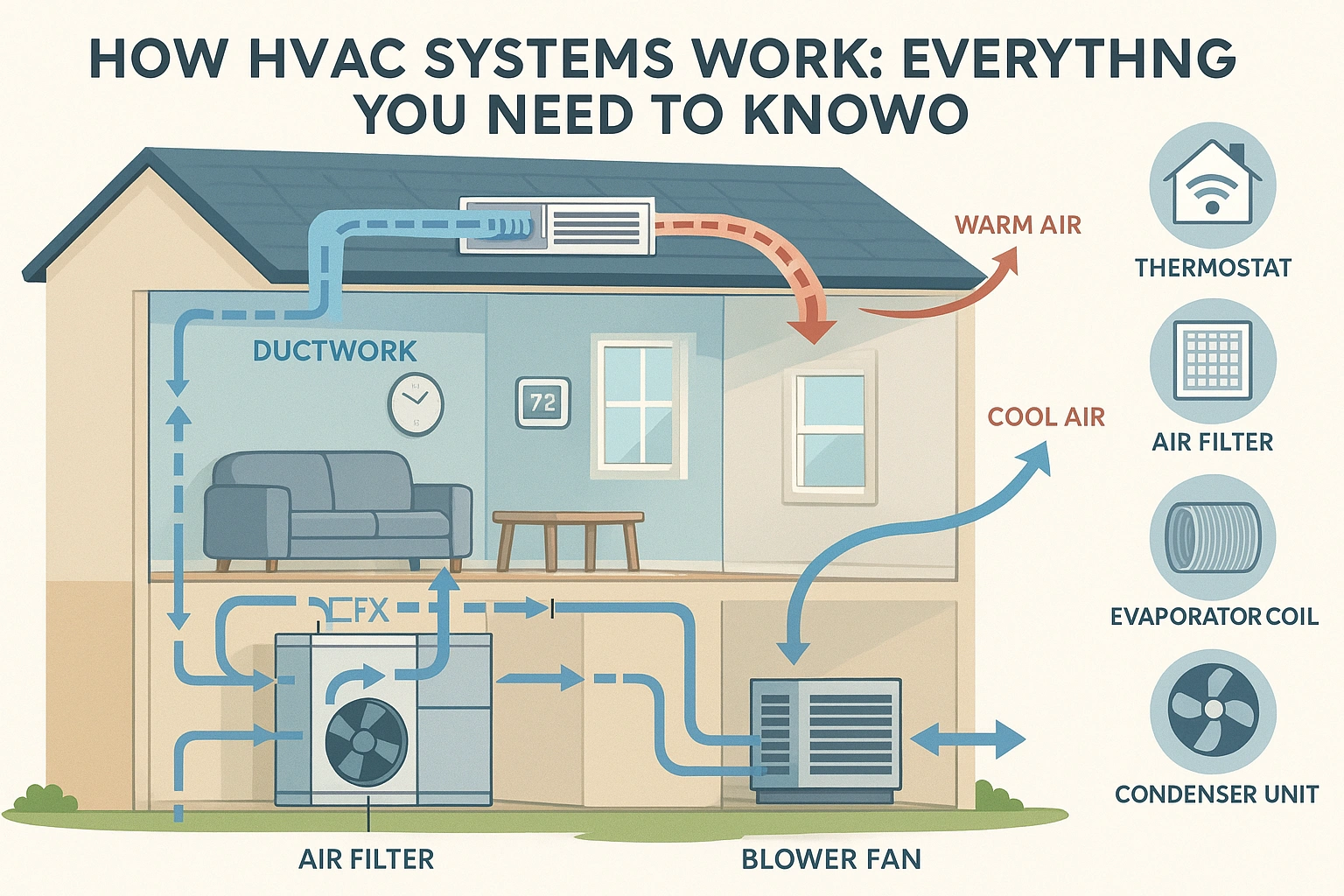

The Working of HVAC Systems Explained
Maintaining a comfortable indoor environment is crucial for our daily lives, and HVAC systems play a vital role in achieving this. These systems are responsible for regulating heating and cooling in our homes and buildings, ensuring a consistent and healthy indoor climate.

Understanding how these systems operate is essential for appreciating their impact on indoor air quality and overall energy efficiency. This article will delve into the intricacies of HVAC systems, providing a comprehensive guide on their inner workings and importance in our daily lives.
Understanding HVAC Systems: The Basics
Heating, Ventilation, and Air Conditioning (HVAC) systems are integral to maintaining a comfortable indoor climate. They are responsible for controlling temperature, humidity, and air quality in residential and commercial buildings.
What Does HVAC Stand For?
The acronym HVAC stands for Heating, Ventilation, and Air Conditioning. It’s a term widely used in the construction and building maintenance industries to refer to systems that control the environment within buildings.
The Purpose and Importance of HVAC Systems
HVAC systems play a crucial role in maintaining indoor air quality and comfort. They not only regulate temperature but also help in circulating and refreshing the air inside buildings, thereby improving the overall indoor environment.
Proper ventilation is essential for removing stale air and bringing in fresh air from outside, which is vital for the health and comfort of occupants.
Common Types of HVAC Systems
There are several types of HVAC systems, each with its unique characteristics and benefits. The most common types include:
- Split Systems: These are popular for their efficiency and flexibility. A split system consists of an outdoor unit and one or more indoor units.
- Packaged Units: Packaged HVAC units are self-contained systems where all components are housed in a single unit, typically installed outside the building.
- Hybrid Systems: Hybrid HVAC systems combine different energy sources, such as electric and gas, to provide efficient heating and cooling.
Core Components of an HVAC System
The core components of an HVAC system, including the furnace, air conditioner, ductwork, and thermostats, are vital for maintaining a comfortable indoor environment. These components work together seamlessly to ensure that buildings are heated and cooled efficiently.
The Furnace: Heart of the Heating System
The furnace is a critical component of an HVAC system, responsible for generating heat. It is typically powered by either gas or electricity.
Gas vs. Electric Furnaces
Gas furnaces are known for their efficiency and cost-effectiveness, especially in colder climates. Electric furnaces, on the other hand, are often preferred for their simplicity and lower upfront costs. The choice between gas and electric furnaces depends on various factors, including energy prices and personal preference.
Air Conditioner Components
The air conditioner is another crucial component, responsible for cooling the indoor air. It consists of several key parts, including the compressor, condenser, and evaporator coil.
Compressor
The compressor is the heart of the air conditioning system, compressing refrigerant to facilitate the cooling process.
Condenser
The condenser is responsible for dissipating heat from the refrigerant, allowing the system to cool the indoor air effectively.
Evaporator Coil
The evaporator coil absorbs heat from the indoor air, cooling it down before it is circulated back into the building.
Ductwork and Vents
Ductwork and vents play a vital role in distributing heated or cooled air throughout the building. Properly designed and maintained ductwork ensures efficient airflow and helps maintain a consistent indoor temperature.
Thermostats and Control Systems
Thermostats and control systems are essential for regulating the HVAC system’s operation. Modern thermostats often come with advanced features such as programmable settings and smart home integration, allowing for greater control over indoor temperatures.
| Component | Function |
|---|---|
| Furnace | Generates heat |
| Air Conditioner | Cools indoor air |
| Ductwork and Vents | Distributes heated or cooled air |
| Thermostats | Regulates HVAC system operation |
How HVAC Systems Work: Everything You Need to Know
The operational principles of HVAC systems involve a fascinating interplay of mechanical and thermodynamic processes. At its core, an HVAC system is designed to provide a comfortable indoor environment by controlling temperature, humidity, and air quality.
The Complete Cycle of Air Conditioning and Heating
The air conditioning and heating cycle is fundamental to understanding how HVAC systems operate. In the heating mode, HVAC systems warm the indoor air by transferring heat from a fuel source or the outdoor air to the indoor space. Conversely, in the cooling mode, they remove heat from the indoor air and transfer it outside, thus cooling the indoor environment.
This cycle is facilitated by several key components working in tandem. The process begins with the thermostat, which senses the indoor temperature and signals the HVAC system to either heat or cool the air. The heated or cooled air is then distributed throughout the building via a network of ducts and vents.
The Role of Refrigerants in Heat Transfer
Refrigerants play a crucial role in the heat transfer process within HVAC systems. These substances change state from liquid to gas as they absorb heat from the indoor air, and then release heat outside as they condense back into a liquid. This phase change process allows for efficient heat transfer.
The most common refrigerants used in modern HVAC systems include R-410A and R-32, which are chosen for their thermodynamic properties and environmental considerations. The selection of refrigerants is critical, as it affects not only the system’s efficiency but also its environmental impact.
| Refrigerant | Characteristics | Environmental Impact |
|---|---|---|
| R-410A | High cooling capacity, non-toxic | High global warming potential |
| R-32 | Efficient, lower GWP than R-410A | Lower global warming potential |
Energy Transfer Principles in HVAC
Energy transfer in HVAC systems is governed by the principles of thermodynamics. The first law of thermodynamics, which states that energy cannot be created or destroyed, only converted from one form to another, is particularly relevant. HVAC systems convert energy from one form (e.g., electrical or chemical energy from fuels) into heating or cooling.
The efficiency of this energy transfer process is critical for the overall performance of the HVAC system. Factors such as insulation, system design, and the efficiency of individual components all contribute to the system’s ability to effectively transfer energy.
The Heating Process Explained
At the heart of every HVAC system lies a heating process that deserves closer inspection. This process is fundamental to understanding how homes and buildings are warmed during the colder months.
Gas Furnace Operation
Gas furnaces are a common heating solution, operating through two primary stages: ignition and combustion, and heat exchange.
Ignition and Combustion
The process begins with ignition, where a spark or pilot light ignites the fuel (natural gas or propane), leading to combustion. This combustion heats the air or a specific medium.
Heat Exchange
The heated medium then transfers its heat to the circulating air through a heat exchanger, warming the air that is distributed throughout the building.
Electric Heating Methods
Electric heating systems, on the other hand, use electricity to generate heat. This can be achieved through resistance heating elements or electric heat pumps.
Heat Pumps: Heating Mode
Heat pumps are versatile, offering both heating and cooling by reversing the refrigeration cycle.
Reverse Refrigeration Cycle
In heating mode, heat pumps extract heat from the outside air (even in cold temperatures) and transfer it inside. This is achieved by reversing the flow of refrigerant, making it an efficient heating solution.
Here’s a comparison of the heating methods discussed:
| Heating Method | Primary Mechanism | Efficiency |
|---|---|---|
| Gas Furnace | Combustion of Gas | High |
| Electric Heating | Resistance Heating | Moderate |
| Heat Pumps | Reverse Refrigeration Cycle | High |
Understanding these heating processes can help in making informed decisions about HVAC systems, whether you’re installing a new system or maintaining an existing one.
The Cooling Process Demystified
Delving into the cooling process reveals the intricate mechanisms that keep our indoor environments comfortable. The cooling function is a critical aspect of HVAC systems, ensuring that buildings remain cool even during the hottest periods.
Compression and Condensation Cycle
The compression and condensation cycle is a vital part of the cooling process. It begins with the compressor, which compresses the refrigerant, raising its temperature and pressure. This hot, high-pressure gas then flows into the condenser coil, where it releases its heat to the surrounding air and condenses into a liquid.
The condensation process is facilitated by the condenser fan, which blows air across the condenser coil to enhance heat transfer. As the refrigerant condenses, it becomes a high-pressure liquid ready for the next stage of the cooling cycle.
Evaporation and Cooling
Evaporation is the key to cooling in HVAC systems. The high-pressure liquid refrigerant passes through an expansion valve, which reduces its pressure and allows it to expand. This cold, low-pressure liquid then enters the evaporator coil, where it absorbs heat from the indoor air, causing the refrigerant to evaporate into a gas.
The evaporator fan blows indoor air across the evaporator coil, cooling the air before it is distributed throughout the building. This continuous process maintains a comfortable indoor temperature.
Heat Pumps: Cooling Mode
Heat pumps are versatile HVAC systems that can provide both heating and cooling. In cooling mode, they operate similarly to air conditioners, transferring heat from indoors to outdoors. The reversal of the refrigerant flow allows heat pumps to cool the indoor air by extracting heat and transferring it outside.
This dual functionality makes heat pumps an efficient and practical solution for year-round comfort.
Ventilation Systems and Indoor Air Quality
Effective ventilation is critical for removing pollutants and maintaining a healthy indoor environment. Ventilation systems are designed to provide a controlled exchange of air, ensuring that indoor air remains fresh and clean.
Air Exchange Mechanisms
Air exchange mechanisms are fundamental to the operation of ventilation systems. These mechanisms involve the transfer of air between the indoors and outdoors, either through natural means or mechanical systems. Natural ventilation relies on windows, doors, and vents to facilitate air exchange, while mechanical ventilation uses fans and ducts to circulate and exchange air.

Filtration Systems and Air Purification
Filtration systems are a crucial component of ventilation systems, responsible for removing airborne contaminants. The effectiveness of these systems is often determined by the type of filter used.
MERV Ratings Explained
MERV (Minimum Efficiency Reporting Value) is a measure of a filter’s ability to capture particles of various sizes. Filters with higher MERV ratings are more efficient at removing smaller particles, including dust, pollen, and other airborne pollutants.
HEPA Filters
HEPA (High Efficiency Particulate Air) filters are a type of high-efficiency filter that can capture 99.97% of particles as small as 0.3 microns. They are particularly effective in removing allergens, bacteria, and viruses from the air, making them a popular choice for individuals with respiratory issues.
| Filter Type | MERV Rating | Particle Size Captured |
|---|---|---|
| Standard Filter | 1-4 | Large particles (dust, lint) |
| Medium Efficiency Filter | 5-8 | Medium particles (mold, pollen) |
| High Efficiency Filter (HEPA) | 13-16 | Small particles (bacteria, viruses) |
Humidity Control and Its Importance
Humidity control is another vital aspect of maintaining good indoor air quality. Proper humidity levels can prevent the growth of mold and mildew, reduce the presence of dust mites, and minimize the transmission of certain viruses. Ventilation systems often include components designed to control humidity, such as dehumidifiers and humidifiers, to maintain a healthy indoor environment.
“Indoor air quality is a significant concern because people spend a substantial amount of time indoors, where pollutant levels can be higher than outdoors.”
– Environmental Protection Agency
By understanding and implementing effective ventilation systems, including air exchange mechanisms, filtration systems, and humidity control, individuals can significantly improve indoor air quality, contributing to a healthier living or working environment.
Zoning Systems and Smart HVAC Controls
Zoning systems and smart HVAC controls are revolutionizing the way we manage indoor climates, offering unprecedented levels of control and efficiency. These advanced systems allow for a more tailored approach to heating and cooling, ensuring that different areas of a building are maintained at optimal temperatures.
How Zoning Systems Distribute Air
Zoning systems work by dividing a building into separate areas or zones, each with its own temperature control. This is achieved through a network of dampers and sensors that regulate airflow, ensuring that each zone receives the appropriate amount of heated or cooled air. By doing so, zoning systems eliminate the one-size-fits-all approach to HVAC, providing a more comfortable and energy-efficient solution.
Smart Thermostats and Home Automation
Smart thermostats are a crucial component of modern HVAC systems, offering advanced features like remote temperature sensing, scheduling, and energy usage monitoring. When integrated with home automation systems, smart thermostats can learn occupants’ preferences and adjust temperatures accordingly, maximizing both comfort and energy efficiency.
Benefits of Zoned HVAC Systems
The benefits of zoned HVAC systems are numerous. They include improved comfort, as different areas of the building can be maintained at different temperatures. Additionally, zoning systems can lead to significant energy savings by avoiding the heating or cooling of unoccupied areas. This targeted approach also reduces wear and tear on the HVAC system, potentially extending its lifespan.
Energy Efficiency and Environmental Considerations
With the growing concern over energy consumption and environmental sustainability, understanding the efficiency of HVAC systems is more critical than ever. As we move towards more eco-friendly solutions, it’s essential to examine how modern HVAC systems are designed to minimize environmental impact while maximizing energy efficiency.

SEER and AFUE Ratings Explained
Two crucial metrics for evaluating the efficiency of HVAC systems are the Seasonal Energy Efficiency Ratio (SEER) and Annual Fuel Utilization Efficiency (AFUE). SEER measures the cooling efficiency of air conditioning and heat pump systems, with higher ratings indicating better efficiency. AFUE, on the other hand, measures the efficiency of furnaces, representing the percentage of fuel converted into usable heat. Understanding these ratings helps consumers make informed decisions when selecting HVAC systems.
Energy-Saving Features in Modern Systems
Modern HVAC systems incorporate various energy-saving features to enhance efficiency. These include variable speed compressors, which adjust their output based on the heating or cooling demand, and smart thermostats, which can learn a household’s schedule and preferences to optimize heating and cooling. Such features not only reduce energy consumption but also improve the overall comfort by maintaining a consistent indoor climate.
Environmental Impact and Eco-Friendly Options
The environmental impact of HVAC systems is a significant concern, primarily due to their energy consumption and the use of refrigerants that can contribute to global warming. However, there are eco-friendly options available, including systems that use alternative refrigerants with lower global warming potential and those designed for integration with renewable energy sources.
Refrigerant Evolution
The HVAC industry is witnessing a shift towards more environmentally friendly refrigerants. New refrigerants are being developed to have lower Global Warming Potential (GWP), reducing the impact on climate change. This evolution is crucial as older refrigerants are phased out in accordance with international agreements aimed at protecting the ozone layer and mitigating global warming.
Renewable Energy Integration
Another significant trend is the integration of HVAC systems with renewable energy sources, such as solar and geothermal energy. This integration not only reduces reliance on fossil fuels but also decreases the carbon footprint of HVAC operations. As technology advances, the efficiency and feasibility of such integrations are expected to improve, making HVAC systems more sustainable.
Conclusion: The Future of HVAC Technology
The future of HVAC technology is poised to revolutionize the way we heat, cool, and ventilate our homes and buildings. As we’ve explored in this article, understanding the inner workings of HVAC systems is crucial for appreciating the advancements that are shaping the industry.
Advances in HVAC technology are driving improvements in energy efficiency, indoor air quality, and overall system performance. The integration of smart thermostats and home automation systems is becoming increasingly popular, allowing for more precise control over HVAC systems and enhanced user experience.
As the industry continues to evolve, we can expect to see further innovations in areas such as zoning systems, energy recovery ventilation, and eco-friendly refrigerants. The future of HVAC will likely be characterized by increased adoption of sustainable practices and technologies that minimize environmental impact.
By staying informed about the latest developments in HVAC technology, homeowners and building managers can make informed decisions about their systems and stay ahead of the curve. As HVAC technology continues to advance, it’s clear that the future holds exciting possibilities for improved comfort, efficiency, and sustainability.
FAQ
What does HVAC stand for?
HVAC stands for Heating, Ventilation, and Air Conditioning. It’s a system used to control the temperature, humidity, and air quality in buildings.
How often should I replace my air filters?
It’s recommended to replace your air filters every 1-3 months, depending on the type of filter, usage, and manufacturer’s instructions. Regular replacement ensures optimal system performance and indoor air quality.
What is the difference between a split system and a packaged unit?
A split system consists of an outdoor unit (condenser) and an indoor unit (evaporator), while a packaged unit is a self-contained system that includes all components in one outdoor unit. Split systems are more common in residential settings, while packaged units are often used in commercial applications.
How do I know if my HVAC system is energy-efficient?
Check the SEER (Seasonal Energy Efficiency Ratio) and AFUE (Annual Fuel Utilization Efficiency) ratings of your HVAC system. Higher ratings indicate greater energy efficiency. You can also look for systems with energy-saving features, such as smart thermostats and programmable controls.
Can I install a new HVAC system myself?
No, it’s not recommended to install a new HVAC system yourself. HVAC installation requires specialized training, equipment, and expertise. Improper installation can lead to reduced system performance, increased energy bills, and safety hazards. Hire a licensed and experienced HVAC professional for the installation.
How can I improve the indoor air quality in my home?
To improve indoor air quality, consider upgrading to a higher-efficiency air filter, installing a whole-house humidifier or dehumidifier, and ensuring proper ventilation. Regular maintenance of your HVAC system, including duct cleaning and inspection, can also help.
What are the benefits of a zoned HVAC system?
A zoned HVAC system allows you to control the temperature in different areas or zones of your home independently. This can lead to increased comfort, reduced energy consumption, and extended system lifespan. Zoned systems can be particularly beneficial in larger homes or homes with varying heating and cooling needs.
How do smart thermostats work?
Smart thermostats use advanced algorithms, sensors, and connectivity to learn your temperature preferences and adjust the temperature accordingly. They can be controlled remotely through mobile apps, and some models can even integrate with other smart home devices.
What is the role of refrigerants in HVAC systems?
Refrigerants play a crucial role in the operation of HVAC systems, facilitating heat transfer between the indoor and outdoor environments. They change state from liquid to gas as they absorb or release heat, allowing the system to cool or heat the air.

Informative,Good