
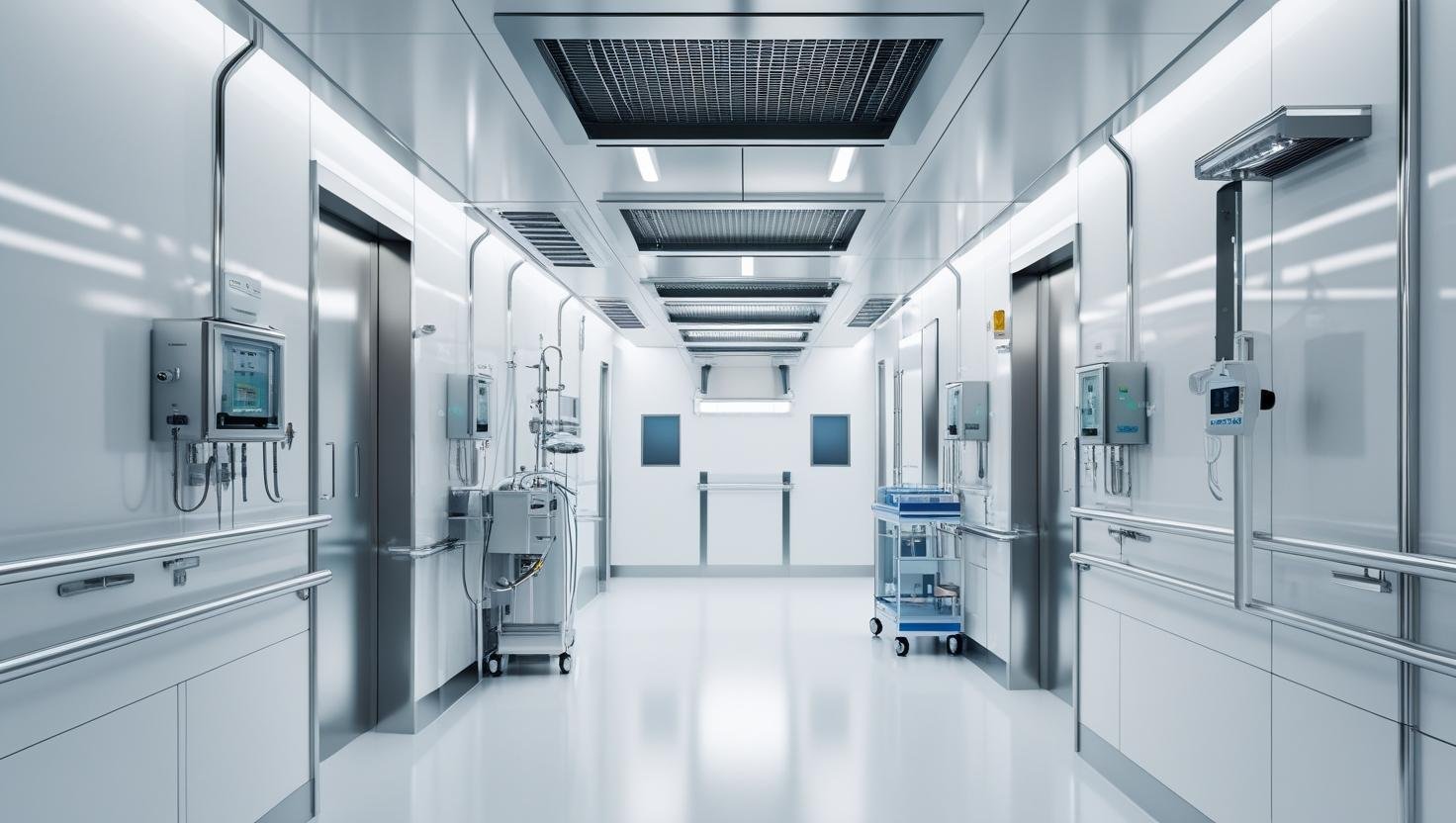

Introduction: Breathing Life into Healthcare Spaces
In healthcare, air is more than just comfort—it’s critical to survival. From operating rooms to ICUs, the quality and control of air directly impact patient outcomes, staff safety, and infection control. That’s where customized air handling solutions come in.
“The right air handling system in a hospital isn’t a luxury—it’s a life-saving necessity.”
— Dr. Farah Mahmood, Hospital Infrastructure Consultant
Off-the-shelf HVAC units often fail to meet the unique demands of healthcare environments. Customized air handling units (AHUs), designed specifically for medical settings, ensure cleaner air, stable temperature, and precise humidity—all essential in reducing airborne contaminants and infections.
What Are Customized Air Handling Solutions?
Customized Air Handling Solutions refer to HVAC systems tailored for specific healthcare applications. Unlike standard AHUs, these are designed around the unique functional, regulatory, and environmental needs of a facility.
Key Custom Features:
| Feature | Purpose in Healthcare |
|---|---|
| HEPA & ULPA Filters | Remove airborne bacteria and viruses. |
| Laminar Flow Control | Prevents cross-contamination in operating rooms. |
| Pressure Zoning | Isolates infected zones (negative pressure) or protects critical zones (positive pressure). |
| Humidity & Temperature Precision | Maintains strict environmental conditions for patient safety. |
| Antimicrobial Coating | Prevents microbial growth inside ductwork and units. |
Why Custom Air Handling Solutions Matter in Hospitals
1. Infection Control
Airborne transmission of pathogens like MRSA, COVID-19, and TB can be deadly in hospital settings. Custom systems:
- Maintain strict positive/negative pressure differentials
- Support isolation rooms, ICUs, and surgical suites
- Include filtration systems that exceed standard codes
2. Compliance with Healthcare Standards
Healthcare facilities must comply with:
- ASHRAE 170 (Ventilation for Health Care Facilities)
- CDC Guidelines for Environmental Infection Control
- Local building codes and NABH, JCI standards
Customized AHUs are built with these regulations in mind.
3. Critical Environment Control
Some areas require near-perfect conditions:
- Operating Rooms: Precise temp, humidity, and air changes per hour (ACH)
- NICUs: Extremely sensitive zones needing ultra-clean air
- Pharmacy Clean Rooms: ISO-classified spaces requiring total air purity
Standard systems can’t achieve this level of control.
4. Energy Efficiency Without Compromise
Customized AHUs use:
- Variable Frequency Drives (VFDs)
- Energy Recovery Wheels
- Demand-based Ventilation
…all of which provide energy savings without compromising air quality.
Trends in Healthcare Air Handling (2025+)
| Trend | Impact |
|---|---|
| Smart Air Monitoring | Real-time IAQ (Indoor Air Quality) dashboards in critical zones |
| AI-Driven Optimization | Predictive airflow adjustments based on occupancy and infection risk |
| Low-Noise Operation | Improves patient rest and recovery |
| Modular AHU Designs | Faster installation and future-proof scalability |
| Green Healthcare Design | Aligns with LEED and Net-Zero hospital standards |
“Hospitals today don’t just need clean air—they need intelligent air.”
— Healthcare Engineering Today, 2025 Edition
Use Case Example: Custom AHU in an Isolation Ward
Before: Standard AHU unable to maintain pressure separation → Increased cross-infection.
After: Customized AHU with:
- Negative pressure zoning
- HEPA filters + UVGI sterilization
- Airflow pattern control
✅ Outcome: 60% reduction in airborne infections
✅ Patient safety improved
✅ Compliance with international health codes
FAQs: Customized Air Handling in Healthcare
❓ Can’t hospitals use standard HVAC systems?
Not safely. Healthcare environments need higher filtration, cleanliness, zoning, and reliability than most commercial spaces.
❓ Are customized AHUs more expensive?
Yes, initially. But they:
- Lower energy bills
- Reduce infection-related costs
- Minimize legal risks due to non-compliance
They pay off in performance and long-term savings.
❓ How long does it take to install a custom air system?
Typical installation ranges from 4 to 12 weeks, depending on size and facility complexity.
❓ Are there smart/automated custom air systems?
Absolutely. Many AHUs now come with IoT sensors, remote access, and predictive maintenance alerts.
❓ What certifications should healthcare AHUs meet?
Look for compliance with:
- ASHRAE 170
- ISO 14644 (for cleanrooms)
- UL standards
- Local health authorities (e.g., DRAP, NABH, JCI)
Final Thoughts: Precision Air for Life-Saving Care
In healthcare, air is medicine. It can support healing or accelerate harm. That’s why customized air handling solutions are not just smart—they’re essential. For patient safety, regulatory compliance, and long-term operational success, healthcare facilities must invest in systems built for their unique challenges.
“In the operating room, every breath must be safe. Custom AHUs make that possible.”
— Senior Surgeon, National Cardiac Institute


Permalink